

The weekend no longer exists<\/h2>
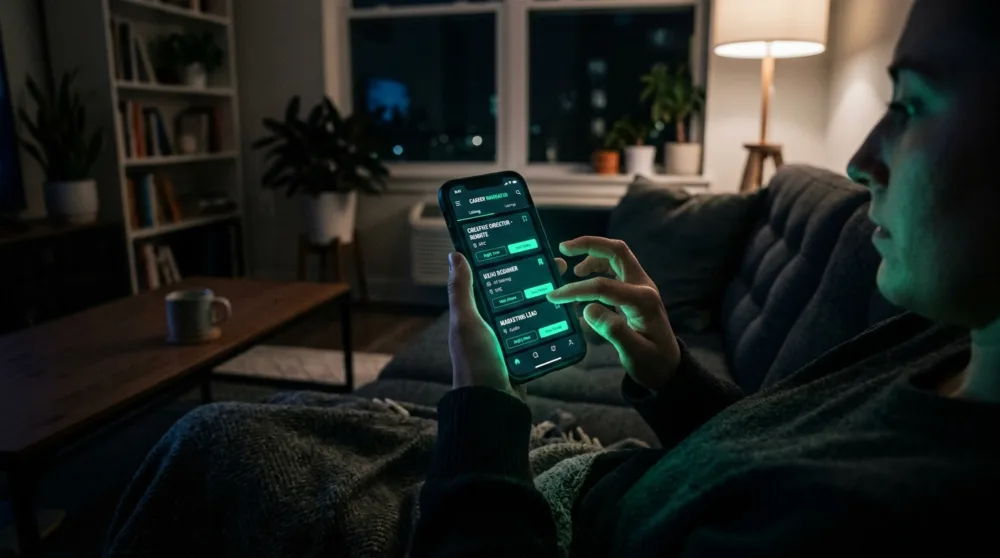
Nearly 80,000 applications came in on Sunday. Tens of thousands more on Saturday. These are not exceptions; this is a structural pattern. People are scrolling through job listings on the couch, quickly typing an application on their phone, and then going back to their series on Netflix.<\/p>
The peak on Monday is still the largest, but the difference with the rest of the week is getting smaller every year. Applying for jobs is no longer a "Monday morning behind the laptop" activity. It happens all week, at any time of the day.<\/p>
The night owls<\/h2>
Nearly 80,000 applications came in between midnight and six in the morning. Whether that is ambition or insomnia, I don't know, but it is a trend that cannot be ignored. It says something fundamental about how the application process has changed: it has become fully mobile.<\/p>
People no longer search at a fixed place at a fixed time. They search when it suits them. On the train, in bed, while waiting at the dentist. The application form that only works well on a desktop is a problem.<\/p>
What this means for employers<\/h2>
If your application form does not work well on a phone at two in the morning, you are missing out on candidates. That is not an exaggeration; that is what the data shows.<\/p>
But it goes beyond just a mobile-friendly form. The entire candidate journey needs to be re-evaluated from the perspective of someone who can apply at any random moment:<\/p>
- Is your job description scannable on a small screen?<\/li>
- Can someone apply without uploading a separate document?<\/li>
- Does a candidate applying at 11:00 PM have the same experience as someone applying at 10:00 AM?<\/li>
- Is your automatic confirmation email in order, or do people feel like their application is disappearing into a black hole?<\/li><\/ul>
The shift is structural<\/h2>
This is not a temporary trend. The boundaries between work and personal life have been shifting for years, and the pandemic has only accelerated that. Remote work, flexible hours, the always-online culture: all of it affects when and how people look for work.<\/p>
For recruiters and HR teams, this means that the old model of "we process applications during office hours" no longer works. The job market has become 24/7. You don’t have to respond 24/7, but you do need to be ready for it.<\/p>
The job market is no longer sleeping. The question is whether your recruitment process is ready for that.<\/p>